
How to spot a rental scam in Houston before you pay an application fee
By Apartment Locator · Updated 2026-06-26
This is general safety information, not legal or financial advice. If you believe you’ve been scammed, contact local law enforcement and your financial institution directly.
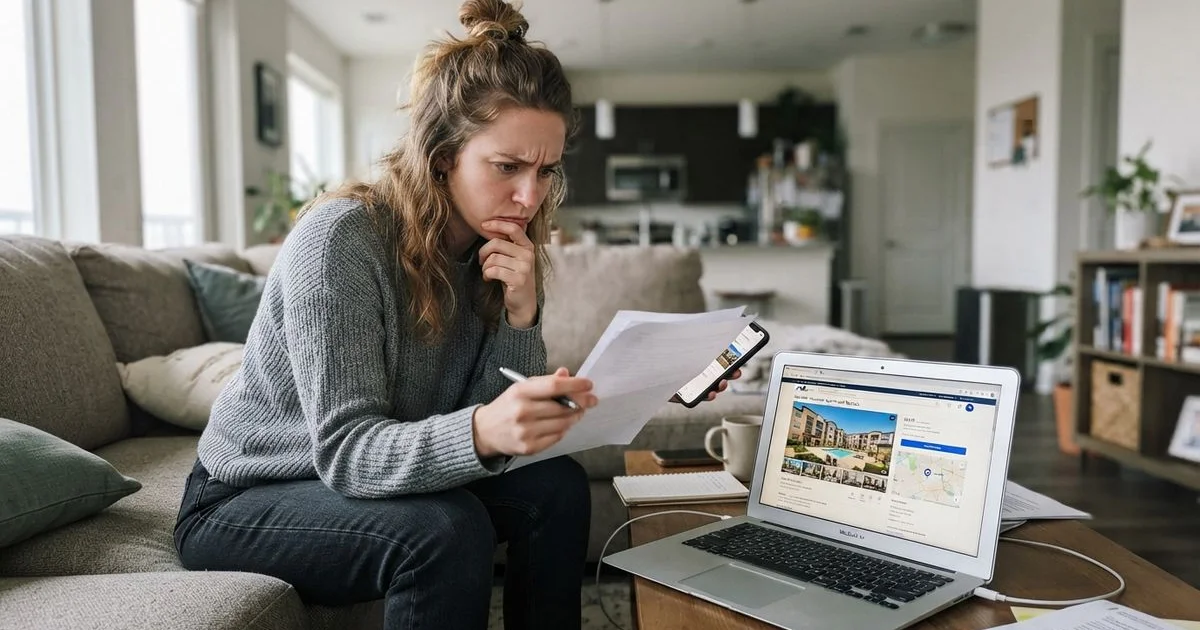
Houston’s rental market moves fast, and scammers take advantage of that urgency by copying real listings, undercutting the price, and pushing renters to pay before they’ve verified anything. Here’s what to watch for.
The most common pattern
A scammer copies photos and details from a legitimate listing, often at a real address, then reposts it at a noticeably lower price to attract attention. The “landlord” is usually described as out of town or unavailable to meet in person, and the story moves quickly toward needing a deposit or first month’s rent by wire transfer, cash app, or gift cards before you can see the unit.
Red flags to watch for
- A price significantly below comparable units in the same area or building
- Pressure to send money before touring or verifying the listing is legitimate
- Payment requested by wire transfer, gift card, or cash app rather than a traceable method
- A “landlord” who can’t meet in person or show the unit themselves
- Listing photos that appear on multiple other sites under different addresses or contact names
- Poor grammar or an inconsistent story between the listing and follow-up messages
How to verify before you pay anything
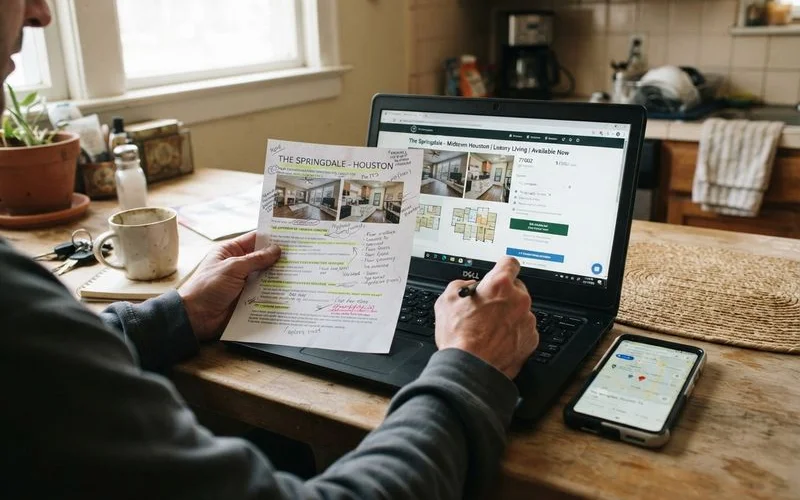
Search the exact address independently to see if it matches a real, currently listed property, and check whether the same photos show up elsewhere under a different price or contact. Call the property’s leasing office using a phone number you find yourself, not one provided in the listing, and confirm whoever you’ve been talking to is actually associated with that property. If a listing claims to be managed by a company, search that company’s name separately to confirm it exists and manages that address. Once you’ve verified a listing is real, the next legal safeguard worth understanding is what happens to your money after you move in; see our guide to Texas security deposit law for what a landlord can and can’t withhold later.
Real vs suspicious listing signals
| Signal | Likely legitimate | Likely a scam |
|---|---|---|
| Price | In line with comparable units nearby | Noticeably below market |
| Tour | Offered before any payment | Refused or delayed indefinitely |
| Payment method | Card, check, or standard portal | Wire, gift card, or cash app only |
| Contact | Reachable through a verifiable office line | Only reachable by text or email |
Scams that target specific situations
Some scams are built around urgency rather than price. A version common during Houston’s busiest moving months targets renters relocating from out of state who can’t tour in person, promising a video call that never quite happens before payment is requested. Another version targets renters searching for affordable or income-based housing specifically, since a lower advertised rent is less likely to raise suspicion in that segment of the market. Being aware that scammers tailor their pitch to whatever situation makes urgency feel normal is itself a useful defense.
What a legitimate leasing process actually looks like
A real Houston property will let you tour in person or over a live video call before any payment beyond, at most, a modest application fee changes hands. They’ll provide a physical office address you can independently verify, and the person you’re dealing with will be reachable through a number listed on the property’s own website or a number you find through an independent search, not just a number provided in a text message or listing. If any part of a listing’s process deviates from this pattern, treat it as a reason to slow down rather than assume it’s simply unconventional.
If something feels off
Trust the hesitation. A legitimate Houston property has no reason to rush you into paying before you’ve toured or verified anything, and a real landlord or leasing office will not object to you calling back through an independently found number. If you’ve already paid and suspect a scam, contact your bank immediately about reversing the transaction, and file a report with local police and the Federal Trade Commission.
Working from a directory that verifies real listing information reduces this risk substantially. The full Houston apartment directory lists communities based on public business data and real resident reviews, not unverified postings, and our methodology explains exactly how each listing is checked before it’s scored.
FAQ
- What's the most common rental scam in Houston?
- A listing copied from a real property, posted at a below-market price, with a 'landlord' who is out of town and asks for a deposit or first month's rent by wire transfer or gift card before you can tour.
- Is it a scam if I can't tour before paying anything?
- It's a serious red flag. Legitimate Houston properties let you tour or verify the unit before any money changes hands beyond, at most, a small application fee.
- How can I verify a listing is real?
- Search the property's address and management company name independently, call the leasing office using a number you find yourself rather than one in the listing, and confirm the person you're talking to actually works there.
- What should I do if I already sent money to a scammer?
- Contact your bank or payment provider immediately to see if the transaction can be reversed, and file a report with local police and the Federal Trade Commission, since documentation helps even if recovery isn't guaranteed.